What AI Actually Means for Trade Compliance (And Why Most Companies Are Still Getting It Wrong)
AI isn't replacing compliance professionals. It's replacing the 60% of their workweek spent on manual research and data entry. Here's what that actually looks like.


Words by
Chen Cui
Your compliance manager just spent 3 hours classifying a single product. Not because they're slow, but because manual HTS classification requires searching rulings, applying GRI logic, and documenting reasoning. AI does this in 30 seconds. But it's not about replacement - it's about giving compliance professionals their time back for strategic work that actually matters.
What AI Actually Means for Trade Compliance (And Why Most Companies Are Still Getting It Wrong)
Your compliance manager just spent 3 hours classifying a single product.
Not because they're slow. Because they had to search the HTSUS for applicable headings, read Section and Chapter Notes, dig through CROSS rulings for precedent, apply GRI 3(b) essential character analysis, and document the reasoning for audit defense.
Three hours. For one SKU.
Now multiply that by 500 new products this year. That's 1,500 hours. 37 work weeks. Almost an entire FTE just on classification.
And that's before tariff monitoring. Denied party screening. Duty drawback claims. FTA qualification. Audit prep.
This is why AI matters in trade compliance. Not because it's cool. Not because it's the future. Because right now, your compliance team is drowning in manual work that machines can do faster and more accurately.
But here's what most companies get wrong about AI in compliance. They think it's about replacement. It's not.
It's about giving your compliance professionals their time back so they can do the work that actually matters.
What AI Actually Is (Without the Hype)
Let's cut through the noise.
AI in trade compliance isn't magic. It's pattern recognition at scale. You train a model on hundreds of thousands of CBP rulings, tariff schedules, regulatory texts, and classification decisions. The model learns the patterns. Learns how GRI logic flows. Learns which material characteristics map to which HTS headings.
Then when you describe a product, the AI doesn't keyword search. It applies the same multi-step reasoning a trained analyst would use. But in 30 seconds instead of 90 minutes.
What makes it different from legacy automation:
Legacy platforms (SAP GTS, Descartes, Oracle GTM) automate workflows. They move data between systems. They enforce rules you manually configure. But they don't reason. They don't learn. They can't adapt when regulations change.
AI does. It references new rulings. Updates when tariff schedules shift. Explains its reasoning. Gets better with use.
That's the fundamental difference. Workflow automation moves boxes around. AI actually thinks through the problem.
Where AI Changes Trade Compliance Workflows
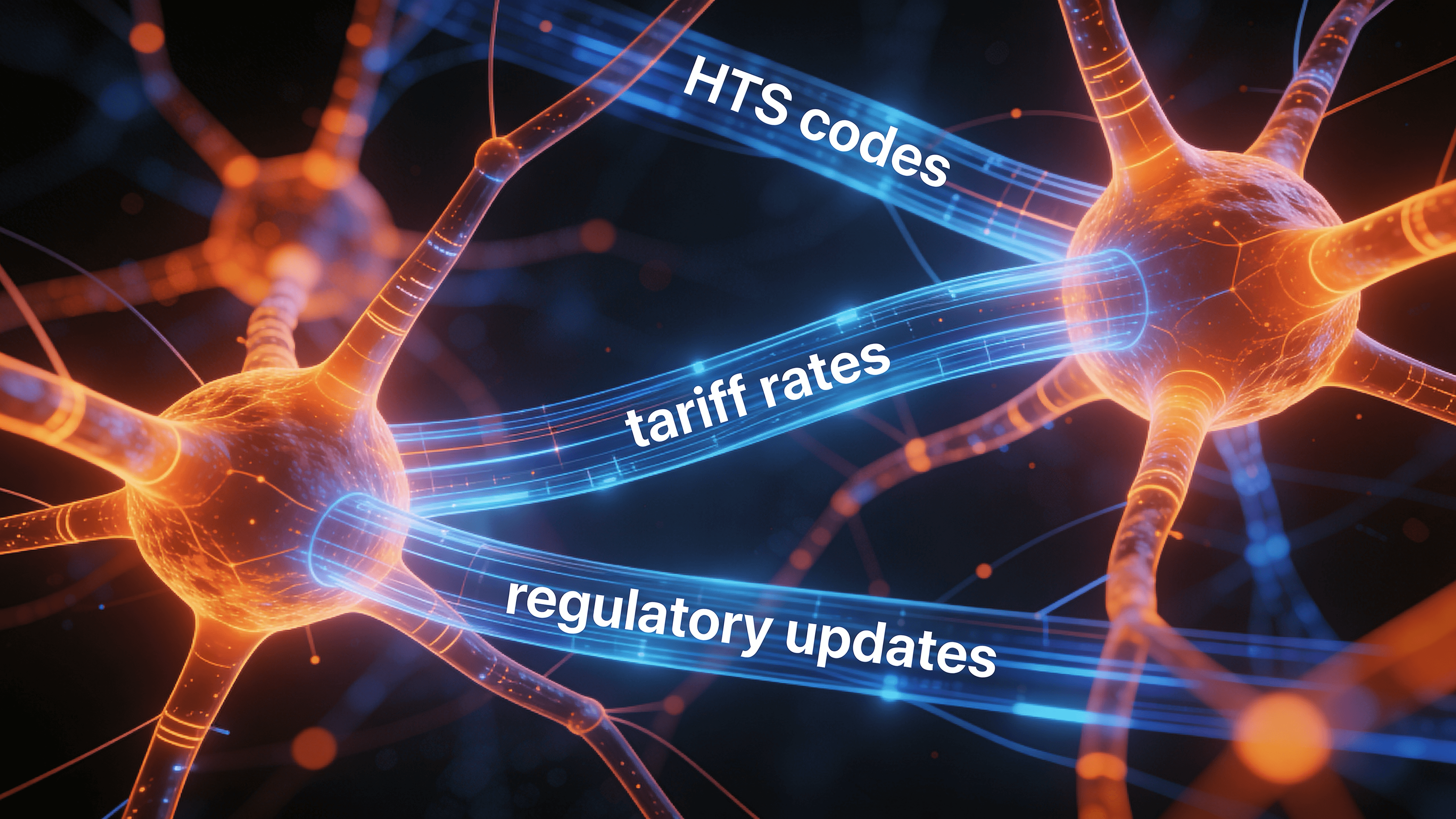
Let's talk specifics. Where does AI actually save time?
1. HTS Classification
Old workflow:
Analyst reads product description
Searches HTSUS for potential headings (30 min)
Reads Section and Chapter Notes (20 min)
Searches CROSS for similar products (30 min)
Applies GRI logic to determine correct heading (20 min)
Documents reasoning (10 min)
Total: 110 minutes per product
AI workflow:
Input product description
AI asks clarifying questions based on GRI requirements
AI searches CROSS, applies GRI logic, references Section Notes
AI returns classification with full reasoning documented
Analyst reviews and approves
Total: 5 minutes per product
Your analyst didn't lose their job. They just got 105 minutes back to work on tariff engineering strategies that could save the company hundreds of thousands in duty costs.
Try our free AI-powered HTS Classification Assistant to see this in action. It walks through the same GRI methodology a customs broker would use, but in seconds.
2. Tariff Change Monitoring
Old workflow:
Check CSMS bulletins manually every morning (15 min)
Check Federal Register for relevant notices (20 min)
Check USTR for Section 301 updates (15 min)
Cross-reference affected HTS codes with product catalog (45 min)
Calculate duty impact (30 min)
Alert procurement and finance teams (15 min)
Total: 140 minutes daily
AI workflow:
AI monitors all regulatory sources 24/7
AI flags affected HTS codes in your catalog within minutes of announcement
AI calculates duty impact across all affected products
System sends automated alert with summary and action items
Analyst reviews and initiates response
Total: 10 minutes daily
That's 130 minutes saved every single day. Your compliance team can actually respond to tariff changes before entries liquidate instead of finding out 3 weeks later when the duty bill arrives.
3. Denied Party Screening
Old workflow:
Export supplier list from ERP
Run names through DPS tool
Review flagged matches manually (many false positives)
Research entity ownership for unclear matches (30-60 min per entity)
Document findings
Total: varies wildly, often 2-4 hours per screening cycle
AI workflow:
AI screens against OFAC, BIS, and other lists with fuzzy matching
AI analyzes entity relationships and ownership structures
AI assigns confidence scores to matches (98% vs 60%)
AI flags true risks with context and remediation steps
Analyst reviews high-confidence matches only
Total: 20-30 minutes per screening cycle
Less time chasing false positives. More time on actual risk management.
4. Audit Documentation
Old workflow:
When CBP sends a CF28 requesting documentation for classification decisions made 2 years ago:
Search emails for original product specs (30 min)
Try to remember which analyst handled it (15 min)
Reconstruct reasoning from notes and memory (2-3 hours)
Pull CROSS rulings that might've been referenced (45 min)
Document everything in CBP-acceptable format (2 hours)
Total: 6+ hours per product under audit
AI workflow:
Every classification decision is automatically logged with:
Complete reasoning (which GRI rules applied)
CROSS rulings referenced
Duty rate comparison performed
Date, time, analyst who reviewed
All in CBP-preferred format
When CF28 arrives:
Search system by HTS code or product name
Export complete audit trail
Analyst reviews for accuracy
Total: 15 minutes per product under audit
That's 5+ hours saved per audited product. When you're responding to a focused assessment covering 50+ entries, that's the difference between a manageable response and a nightmare.
What AI Can't Do (And Why You Still Need Compliance Professionals)

Let's be clear about limitations.
AI can't:
Make judgment calls on edge cases where even CBP disagrees internally
Navigate complex regulatory exceptions that aren't well-documented
Build relationships with customs brokers and CBP officers
Testify in court if classification is challenged
Understand your specific business context and risk tolerance without data
Your compliance team can.
The goal isn't to replace compliance professionals. It's to free them from repetitive research and data entry so they can focus on strategic work.
A good compliance manager doesn't want to spend 40 hours a week looking up HTS codes. They want to:
Design tariff engineering strategies that reduce effective duty rates by 10%
Qualify products for FTA preferential treatment
Negotiate advance rulings with CBP on complex products
Prepare the company for audits before they happen
Build supplier compliance programs
AI gives them time to do that work.
The Adoption Gap (Why Most Companies Aren't Using AI Yet)
Here's the thing. Most manufacturers know they need better compliance tools. But they're stuck.
Three reasons companies aren't adopting AI for compliance:
1. They think it's just another keyword search tool
It's not. Legacy platforms already do keyword search badly. AI applies actual GRI logic and references ruling precedent. Different capability entirely.
2. They're locked into legacy platforms with 3-year contracts
SAP GTS isn't adding real AI classification. They're bolting a chatbot onto 20-year-old architecture. That's not the same thing.
3. They don't trust AI to get it right
Valid concern. But here's the question: do you trust your current process?
Most companies have 1-2 people who know how to classify products correctly. When they leave, that knowledge walks out the door. AI documents the reasoning. Makes it repeatable. Makes it auditable.
What This Looks Like in Practice
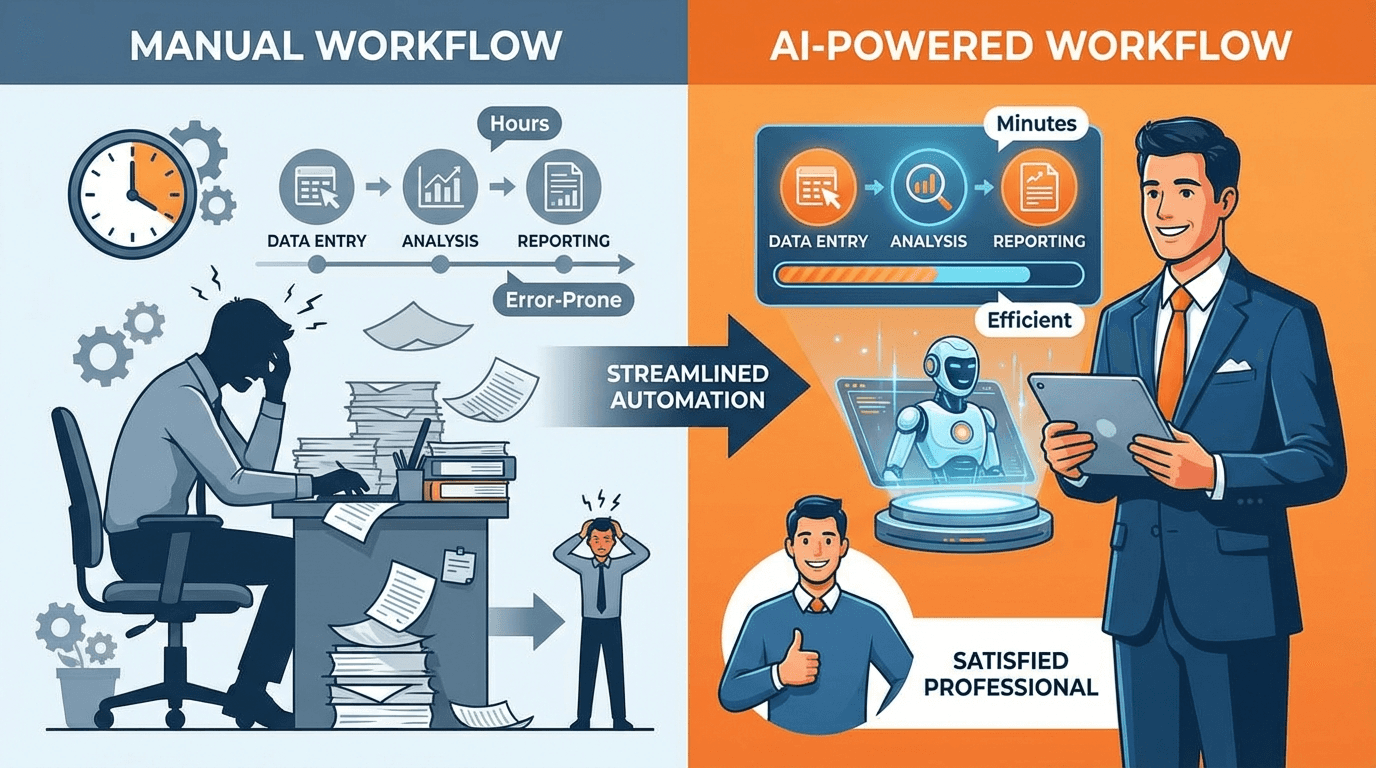
Real example. Mid-market electronics manufacturer. 800 SKUs. Importing from China, Taiwan, Vietnam.
Before AI:
2 FTE compliance team
60% of their time on classification and tariff monitoring
Missed tariff changes regularly (found out at liquidation)
CBP audit in 2024 found misclassification on 18% of products
$240K penalty plus back duties
After switching to AI-native platform:
Same 2 FTE compliance team
15% of their time on classification and monitoring (AI handles first pass)
Tariff changes flagged within hours, not weeks
Re-classified all 800 SKUs with documented reasoning in 3 weeks
Compliance team now focuses on tariff engineering and FTA qualification
Projected $180K annual duty savings from optimization work they finally have time for
The team didn't shrink. The team got more effective.
Run the numbers yourself with our free Tariff Simulator. Model different sourcing scenarios and see where duty optimization opportunities exist.
What's Coming Next
We're at the very beginning of this shift.
Right now, AI can classify products, monitor tariffs, and screen parties. That's table stakes.
What's coming in the next 12-18 months:
AI that proactively suggests tariff engineering strategies based on your product mix
Predictive models that forecast audit risk by entry and recommend remediation before CBP flags it
Automated binding ruling requests that draft the entire submission based on product specs
Real-time duty optimization across multiple sourcing countries and FTA programs
Integration with procurement systems to flag compliance risk during vendor selection
The gap between companies using AI for compliance and companies still doing it manually is about to get very wide.
The Bottom Line
AI isn't replacing trade compliance professionals.
It's replacing the 60% of their workweek spent on manual research, data entry, and regulatory monitoring. The tedious stuff that burns people out and doesn't require strategic thinking.
What takes a human 90 minutes, AI does in 30 seconds. Your compliance team gets that time back. They use it for work that actually moves the needle. Tariff engineering. Audit prep. FTA qualification. Supplier risk management.
This isn't about technology for technology's sake. It's about letting your compliance team do compliance work instead of data entry.
The companies making this shift now are the ones who'll have the capacity to handle 2026's regulatory chaos. Weekly tariff changes. Reciprocal tariffs. Increased audit rates. Stricter enforcement.
The companies still classifying products manually are going to struggle.
GingerControl is working with manufacturers who get this. We're an NVIDIA Inception portfolio company building AI-native compliance tools that actually work the way trade regulations work. Not keyword matching. Not workflow automation. Real GRI logic applied at machine speed with full audit documentation.
If your compliance team is spending more time on research than strategy, let's talk. We'll show you what it looks like when AI handles the grunt work and your team handles the thinking.
Related: